


Flush Ceiling Lights for Low Bedroom Ceilings
A low bedroom ceiling changes what you notice about a ceiling light. In a hallway, almost any neat fitting can get away with it. In a bedroom, the same light is seen first thing in the morning, last thing at night, and very often straight from the pillow. That is why the best bedroom ceiling light is usually the one that feels calm, comfortable and easy to live with. In most UK bedrooms with modest ceiling height, a flush fitting simply makes more sense: it keeps the ceiling line cleaner, avoids that hanging-over-the-bed feeling, and usually gives the room a calmer finish. If you want to compare styles that work well in this kind of room, the Clowas collection of flush ceiling lights is a good place to start.

A wood-edged flush light that suits calm, low bedrooms
A design like the Nordic Round Wood Flush Mount Ceiling Light works especially well in bedrooms that need warmth without visual weight. The slim round shape keeps the ceiling looking clean, while the wood edge adds just enough softness to stop the room feeling too plain or clinical. In a bedroom with oak furniture, neutral bedding or a softer Scandinavian look, this kind of fitting feels easy to place. It is the sort of light that still looks calm when switched off, which matters more in a bedroom than people often expect.
One practical detail people often overlook is how briefly the ceiling light is actually used in a bedroom. It comes on while getting dressed, making the bed, putting washing away, or finding something after dark, then fades into the background again. Later on, bedside lamps usually take over. So the ceiling light does not need to behave like a kitchen task light or a statement piece in a dining room. That is often why simple flush ceiling lights end up feeling more considered in a bedroom than fussier designs that try too hard.
That is where flush ceiling lights make the most sense in a bedroom. A good one does not try to dominate the room. It just makes the bedroom feel easier to live with. In a box room, it helps the ceiling stay out of the way. In a main bedroom, it can give enough presence without becoming the first thing the eye lands on. In a flat or a newer home, it often looks sharper and more considered than a pendant that hangs too low.
This guide stays tightly on that one subject: how to choose flush ceiling lights for low bedroom ceilings. It does not drift into whole-house lighting theory. Instead, it focuses on the decisions that matter in real rooms: profile, diffuser, size, colour temperature, glare, and the common mistakes that make a low bedroom feel worse rather than better.
Why low bedroom ceilings suit flush lights so well
The simplest reason is usually the right one. A bedroom with limited ceiling height does not have much room to spare, so any drop from the ceiling is felt immediately. A pendant may not be dangerously low, yet it can still look as if it is hanging in the room rather than belonging to it. That matters more in a bedroom than elsewhere because the bed tends to sit directly under, or close to, the ceiling light position.
There is also a visual rhythm to a bedroom that pendants often interrupt. The bed is already the room’s largest object. Wardrobes, curtains and a headboard can add a lot of weight around the edges. Once a hanging light is placed in the middle as well, the room can start to feel busy overhead. A flush fitting avoids that. It leaves the centre of the room clearer, which helps the whole space read as lighter and less cramped.
Even so, the benefit is not just about saving space. A flush fitting is usually easier to place in a low bedroom. It does not need extra height to look right or a dramatic centre point to justify itself. It simply sits close to the ceiling and keeps the room feeling straightforward and comfortable.
That is especially useful in UK homes, where bedroom proportions are often tighter than glossy design photos suggest. A Victorian terrace box room, a modest bedroom in a 1930s semi, or a small new-build second bedroom can all benefit from the same thing: a light that feels present but not pushy. A low-profile ceiling light tends to do that better than a hanging one.
What matters most when choosing one
A low bedroom ceiling does not need dozens of technical filters. In practice, a shortlist usually becomes much clearer once five things are judged properly: profile, diffuser, size, colour temperature and glare. Everything else can come afterwards.
Start with the profile, not the finish
The first question is never black, brass, wood or glass. The first question is how far the fitting comes down from the ceiling. If that shape feels too deep, the rest of the decision hardly matters.
This is where many people go wrong. A decorative finish can distract from the actual problem, which is the drop. Something may look soft, elegant or expensive on a product page, but if it hangs further than the room can comfortably carry, it will still make the ceiling feel closer. In a low bedroom, shallow almost always ages better than dramatic.
That does not mean the light has to be flat or boring. A rounded disc, a neat dome, a broad ring or a softly shaped flush mount can all bring enough character. The point is simply that the design should stay close to the ceiling line. Once that is right, colour and style become much easier decisions.
This is also why browsing the main flush ceiling lights category first is often more productive than starting with broader ceiling-light searches. The Clowas flush ceiling lights collection is a more useful place to start if you already know you want something close-fitting for a low bedroom.
Look at the diffuser before anything else
After profile, the diffuser is usually the next big make-or-break detail. In a bedroom, the light source should not feel too exposed. A fitting can have the right shape and still feel unpleasant if the bulbs or LED points are too visible from below.
This matters because bedrooms are seen from more angles than most rooms. Standing at the door is one angle. Standing at the wardrobe is another. Lying on the bed is the important one. A bare bulb that looks stylish from the doorway can be annoying from the pillow. Even a bright ring of light can feel harsher than expected once the room is dark and the ceiling is low.
For that reason, diffused light usually feels better overhead in a bedroom. Frosted glass, opal covers and softened acrylic panels tend to spread the light more evenly and reduce that direct hit to the eyes. The room often ends up feeling brighter as well, because the light is distributed rather than concentrated.
It is worth thinking about this before style. A decorative fitting that softens the light is usually a better bedroom choice than a sharper-looking fitting that leaves the source fully exposed.

A decorative flush style that still feels light overhead
The Rustic Plant Ceiling Light is a good example of how a flush ceiling light can still bring personality into a bedroom without dropping into the room like a pendant. It feels more decorative than a plain disc, but it stays close enough to the ceiling to keep the space feeling comfortable. In a guest bedroom, a softer vintage-inspired room, or a space that already has natural textures and layered bedding, this kind of fitting adds interest without making the ceiling feel busy. It is a good reminder that choosing flush does not mean settling for something plain.
Size should be judged by feel, not fear
Small bedrooms often end up with lights that are too small because there is understandable worry about making the ceiling feel crowded. Ironically, that often creates the opposite problem. A tiny bright fitting can feel more abrupt than a broader, thinner one. It creates a hard point of light rather than a calm spread across the room.
In many low bedrooms, wider and shallower works better than small and punchy. A fitting with enough width to distribute light gently tends to feel more balanced overhead. Meanwhile, a very compact light can end up looking mean, especially if the bed and wardrobes already fill most of the room.
There is no need to overcomplicate this with exact numbers. The practical test is much simpler. If the fitting looks as though it disappears completely, it may be too small. If it looks like it is pressing down into the room, it is probably too large or too deep. The sweet spot is somewhere in between: enough presence to anchor the ceiling, but not enough to dominate it.
A good rule of thumb is to think about the room when the light is off, not just when it is on. In daylight, the fitting still needs to look right against the ceiling. If it seems too heavy then, it will not improve once evening comes.
Colour temperature matters more than brightness in a bedroom
This is another area where everyday use matters more than showroom logic. In a bedroom, comfort usually counts for more than maximum punch. Very cool light can make the room feel sterile, especially against bedding, curtains and painted walls that are meant to feel restful.
Warm white usually feels easier in a bedroom. It sits more naturally with timber furniture, off-whites, muted greens, warm greys and the softer textures that bedrooms tend to have. It also feels better at night, when the room is shifting into evening rather than gearing up for work or chores.
That does not mean a bedroom should be gloomy. The ceiling light still needs to be useful. The point is simply that brightness without warmth often feels wrong in this setting. If the room already has bedside lamps, wall lights or reading lights, the ceiling fitting can be less forceful and more balanced.
Glare is the quickest way to ruin a good-looking choice
Glare is one of those things that gets noticed only after installation, which is why it is worth thinking about early. A bedroom light can look smart, tidy and exactly on trend, yet still feel uncomfortable if the source is too direct.
Low ceilings make that more obvious. There is less distance between the eye and the fitting, so anything harsh becomes more noticeable. This is why strong exposed bulbs, very reflective surfaces and sharp beams need more caution in bedrooms than in kitchens or utility spaces.
A simple question helps here: what will the light feel like when seen from the bed after dark? If the answer is “probably fine”, it is worth looking again. If the answer is “soft, shaded or diffused”, that is much more promising.
The bed view is the real test. Not the showroom photo. Not the flat lay. Not the hero image against a perfect plaster ceiling. In the end, the bed view is what matters most.
Flush lights vs pendants in a low bedroom
This comparison does not need much drama because, in most low bedrooms, the answer is fairly straightforward.
A pendant usually asks for more room than a low bedroom can comfortably give. It introduces a drop into a space that already feels limited overhead. Even when the fitting itself is beautiful, the effect can be slightly awkward once it is actually in the room. The eye keeps noticing it. The ceiling feels lower. The centre of the room feels busier.
A flush light does the opposite. It keeps the ceiling cleaner, leaves more visual breathing space above the bed, and tends to feel easier at night when the room is dark. That does not make pendants “wrong” in general. They can be lovely in rooms with better height or where the drop sits well clear of the bed. But for low bedrooms, flush is usually the safer and better-looking answer.
Semi-flush sits in the middle. It can work where there is a little more breathing room and where a bedroom needs more shape than a standard flush disc gives. Still, if the room feels tight already, flush is normally the more comfortable choice.
For cleaner contemporary looks that still stay close to the ceiling, the Clowas modern flush ceiling lights collection is a useful secondary browse.
What usually works in real UK bedrooms
The best bedroom light often depends less on style labels and more on the sort of room it is going into. A few common UK setups make the decision clearer.
The box room
The box room is where flush lighting really proves its worth. The bed is often tucked close to one wall, storage is tight, and the room can feel cluttered quickly even when it is tidy. In that setting, the ceiling fitting needs to be almost effortless. If a small bedroom already feels full once the bed, curtains and laundry basket are in place, that is usually a sign the ceiling light should stay as visually quiet as possible.
A simple flush fitting with a soft diffuser usually does the job better than anything trying to look statement-led. The room does not need a centrepiece overhead. It needs the ceiling to stay open. A neat round or softly shaped fitting tends to feel best here, especially in pale or warm finishes that do not draw too much attention.
This is also the sort of room where bedside lamps matter. Once a box room has one or two softer evening light sources, the ceiling fitting no longer needs to do everything. That makes a calmer, less aggressive flush light much easier to choose.
The main bedroom in a terrace or semi
A main bedroom often has a bit more width, but that does not mean it can take anything hanging. In fact, this is where proportion really matters because the room may carry a double bed, wardrobes and curtains without having much spare ceiling height.
Here, a broader low-profile ceiling light often works well. It gives enough presence to finish the room, but it keeps the overall feel tidy. Timber details, soft metal edges and warm diffused light usually look good in this type of bedroom because they add warmth without fuss.
A fitting in the spirit of the Nordic Round Wood design works well in this setting because it feels warm and settled rather than showy. It suits the sort of bedroom that already has a wooden bed frame, soft curtains and a more relaxed colour palette. Instead of dragging attention upward, it finishes the ceiling quietly and lets the rest of the room do the talking.
The newer flat or modern spare bedroom
Newer bedrooms often need softness more than they need decoration. Clean plaster lines, fitted wardrobes and simple joinery can leave the room feeling slightly sharp if the ceiling light goes too clinical as well. In newer bedrooms, the wrong ceiling light can make the room feel colder than it really is, even when everything else is well chosen.
That is why modern flush lights with a cleaner line usually work best here, especially when the light itself still feels warm rather than cold. A black or white ring, a slim linear form or a quiet geometric shape can all work well, as long as the fitting stays low and the light is not too severe.
In a room like this, the ceiling should still feel quiet. A statement pendant can upset that balance very quickly.
When a directional flush fitting can work
Not every bedroom wants soft general light and nothing else. Sometimes the room needs a little more control. A wardrobe area may be dark. A dressing corner may need extra help. A guest room that doubles as a study may benefit from light that can be aimed more intentionally.
That is where a compact spotlight-style flush fitting can make sense. The trick, again, is keeping the body of the fitting neat and ceiling-hugging. It should still feel like a low-profile light, not a mini theatre rig.
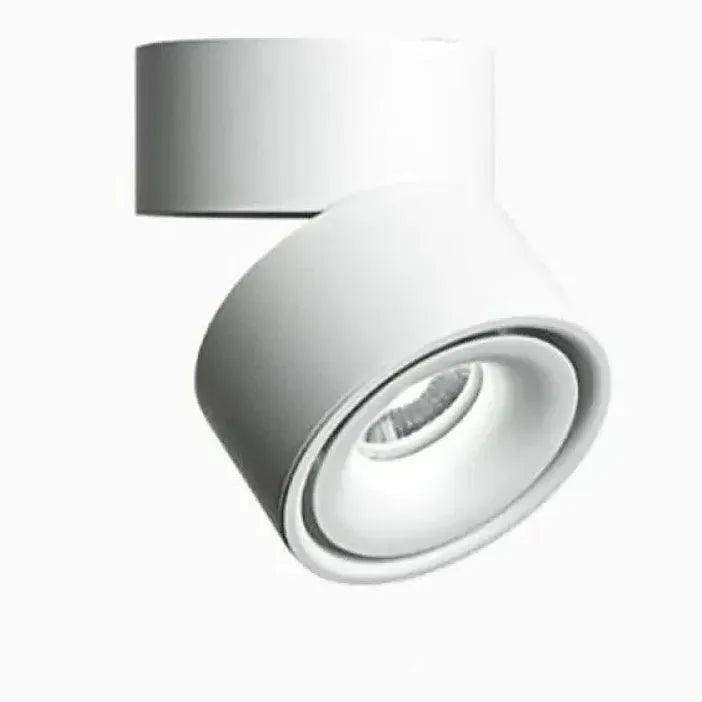
When a compact spotlight-style flush fitting makes sense
A design like the Modern LED Ceiling Spotlight can work well in bedrooms that need a little more directional help near wardrobes, dressing tables or darker corners. This kind of design is usually a better fit for practical rooms than for soft, layered master bedrooms, but it can be very useful in guest rooms or bedrooms that double as getting-ready spaces. The key is choosing one that still looks tidy overhead. Even a more functional flush ceiling light should not make the room feel busy.
This kind of option is not the default answer for every low bedroom, but it can be useful in practical rooms where one broad flush disc would leave corners underlit. Even then, it still needs to feel tidy overhead. If the fitting looks busy or over-designed, it can make the room feel more cluttered than it needs to.
Common mistakes that make a low bedroom feel worse
A few mistakes turn up again and again, and most of them come from trying to solve the wrong problem.
The first is choosing a pendant because the room feels plain. A plain room does not always need a hanging light. Often, it needs better texture, softer bedding, a warmer paint tone or a calmer bedside setup. The ceiling light does not have to supply all the personality on its own.
The second is choosing a tiny fitting because there is worry about bulk. As mentioned earlier, that often creates a hard, mean-looking point overhead instead of a calm spread of light.
The third is forgetting that the bedroom light is not judged only while standing. The bed view matters. So does the evening view with the curtains drawn. A fitting that looks fine in bright daylight can be surprisingly irritating at night.
A few flush ceiling light styles that work especially well in bedrooms
Some bedroom lights look appealing on a product page but feel quite different once they are installed in a real room. That is why it helps to think in terms of room mood as much as product type.
Nordic Round Wood styles tend to work best in bedrooms that need warmth and simplicity at the same time. They suit spaces with wooden furniture, soft neutral colours and a more relaxed, natural look. The appeal is not just the finish. It is the way this kind of flush fitting softens the ceiling without making it feel busy.
More decorative flush styles, such as the Rustic Plant look, are useful when the room needs a little more personality but still cannot carry the drop of a pendant. They can work especially well in guest bedrooms or softer, more layered interiors where a plain white disc would feel too plain.
Directional spotlight-style flush fittings are better where the bedroom has a practical side as well — for example, a dressing area, wardrobe wall or a room that doubles as a study. They are less about atmosphere and more about control, but the compact flush format still keeps the ceiling feeling tidy.
If you want to compare these styles side by side, it helps to start with the main flush ceiling lights collection and narrow things down by finish, shape and overall feel.
How to browse more effectively when comparing options
When looking through a category page, it helps to filter mentally before falling for the first attractive design.
Start with profile. Then move to diffuser. After that, check whether the finish suits the room. Finally, consider added functions such as dimming or adjustable colour. That order usually leads to better bedroom decisions than starting with pure appearance.
A practical way to compare options is to start with the main flush ceiling lights collection, then look at semi flush ceiling lights if the room has a little more breathing space, or modern flush ceiling lights if you want a cleaner contemporary look.
Frequently asked questions
Are flush ceiling lights the best choice for low bedroom ceilings?
Yes. In bedrooms with lower ceilings, flush ceiling lights are often the most comfortable option because they stay close to the ceiling and feel less intrusive from the bed. Styles such as a soft round wood-edged flush fitting can also add warmth without making the room feel crowded.
What colour temperature feels best in a low bedroom?
Warm white is usually the safest and most comfortable choice for a bedroom. It tends to work especially well with wood finishes, soft textiles and relaxed colour palettes, which is why it suits many flush ceiling light styles designed for bedrooms.
Are flush lights better than pendants for low ceilings?
In most low bedrooms, yes. Flush lights preserve headroom and do not visually lower the ceiling in the way pendants often do. Pendants can still work in taller rooms, but in modest-height bedrooms they are usually harder to place and more likely to cause glare or visual clutter.
Can a flush ceiling light still look decorative in a bedroom?
Absolutely. A flush fitting does not have to be plain. Decorative flush styles with softer shapes or botanical details can still add personality, especially in guest bedrooms or more layered interiors, without creating the drop of a pendant.
Which flush ceiling light style works best in a small bedroom?
In a small bedroom, the best choice is usually a fitting that looks light on the ceiling and spreads light gently across the room. A simple round flush light often works well, while a more decorative flush style can suit a guest room if the rest of the space is kept calm.
Final thoughts
A low bedroom ceiling does not need dramatic lighting. It needs thoughtful lighting. The best flush ceiling lights reduce pressure overhead, soften the view from bed and make the room feel more settled in daily life. That is why the right choice is rarely the most elaborate one. Instead, it is the fitting that makes the room feel calmer and more comfortable in everyday use.
For bedrooms in UK homes, that usually means keeping the profile shallow, choosing softer light, getting the scale right and avoiding anything that feels too heavy or too bright overhead. Done well, a flush fitting can make a low room feel calmer, neater and more finished.
For a closer look at low-profile options suited to this kind of space, browse the Clowas flush ceiling lights collection.
Three practical takeaways:
-
Start with the shape and depth before worrying about finish. In a low bedroom, profile matters more than decoration.
-
Softer diffused light usually works better than anything too harsh, especially when the fitting is visible from the bed.
-
Match the fitting to the room’s real scale. A wider shallow light often feels calmer than a tiny bright one.

